Need help?
The Substance Abuse Professional evaluation is the clinical center of the DOT Return-to-Duty process. The SAP does much more than send a driver to a standard class: the professional evaluates the individual case, recommends appropriate education and/or treatment, and later decides whether the driver has demonstrated successful compliance.
That individualized structure is why drivers should be cautious about anyone promising the same program or exact completion timeline to every person before an evaluation has taken place.
The SAP's role is to protect the public interest in transportation safety. DOT rules specifically state that the SAP is not an advocate for the employer or the employee. During the initial clinical evaluation, the SAP assesses the driver and determines what assistance is appropriate after the drug or alcohol violation.
Current DOT rules allow qualifying evaluations to be conducted face-to-face in person or remotely when the regulatory requirements for remote evaluations are satisfied. Regardless of format, the evaluation must meet the professional requirements of Part 40.
The outcome is an individualized recommendation. The SAP may prescribe education, treatment, or both.
Education and treatment are not interchangeable labels for a universal course. Education can include structured programs focused on substance use, safety, and behavior, while treatment can involve more intensive clinical services. The appropriate level depends on the SAP's assessment.
The driver is expected to follow the recommendation rather than selecting a shorter option simply because it is more convenient. DOT rules also limit attempts to obtain a second SAP evaluation merely because the driver or employer disagrees with the first SAP's recommendation.
This makes it important to verify that the professional is qualified to perform DOT SAP functions before starting the process.
After the prescribed education and/or treatment, the driver returns to the SAP for a follow-up evaluation. The SAP obtains or reviews appropriate documentation from the education or treatment provider and conducts another clinical interview.
The purpose is to determine whether the driver has demonstrated successful compliance with the original recommendations. If the SAP concludes that the driver has not successfully complied, the employer cannot return the driver to safety-sensitive duties.
Successful compliance does not always mean every form of continuing care has ended. DOT rules allow a SAP to determine successful compliance while recommending continuing treatment, aftercare, or support services.
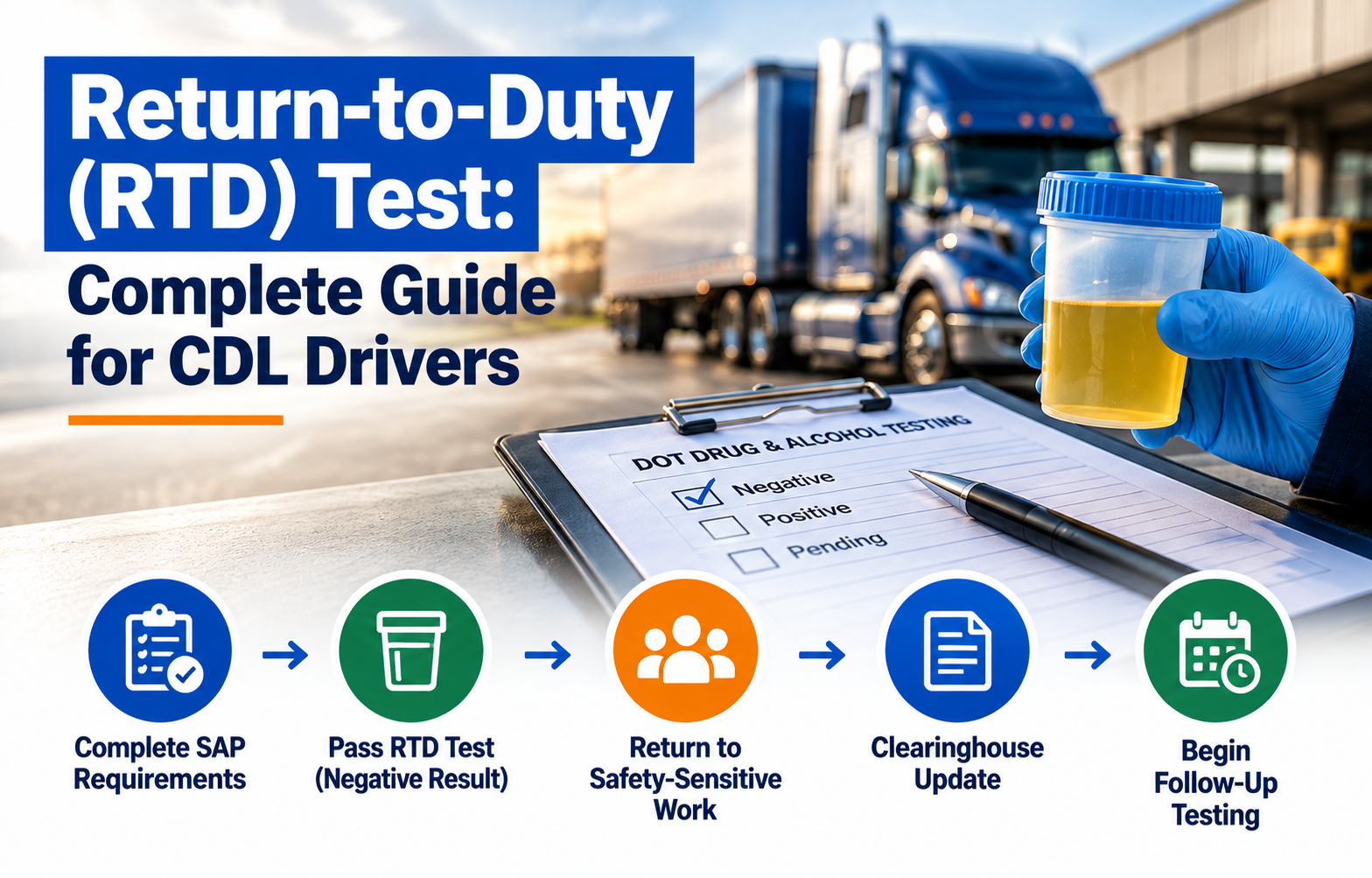
The SAP's successful-compliance determination is what allows the process to move toward Return-to-Duty testing. The RTD test cannot be used to bypass the evaluation or treatment stages.
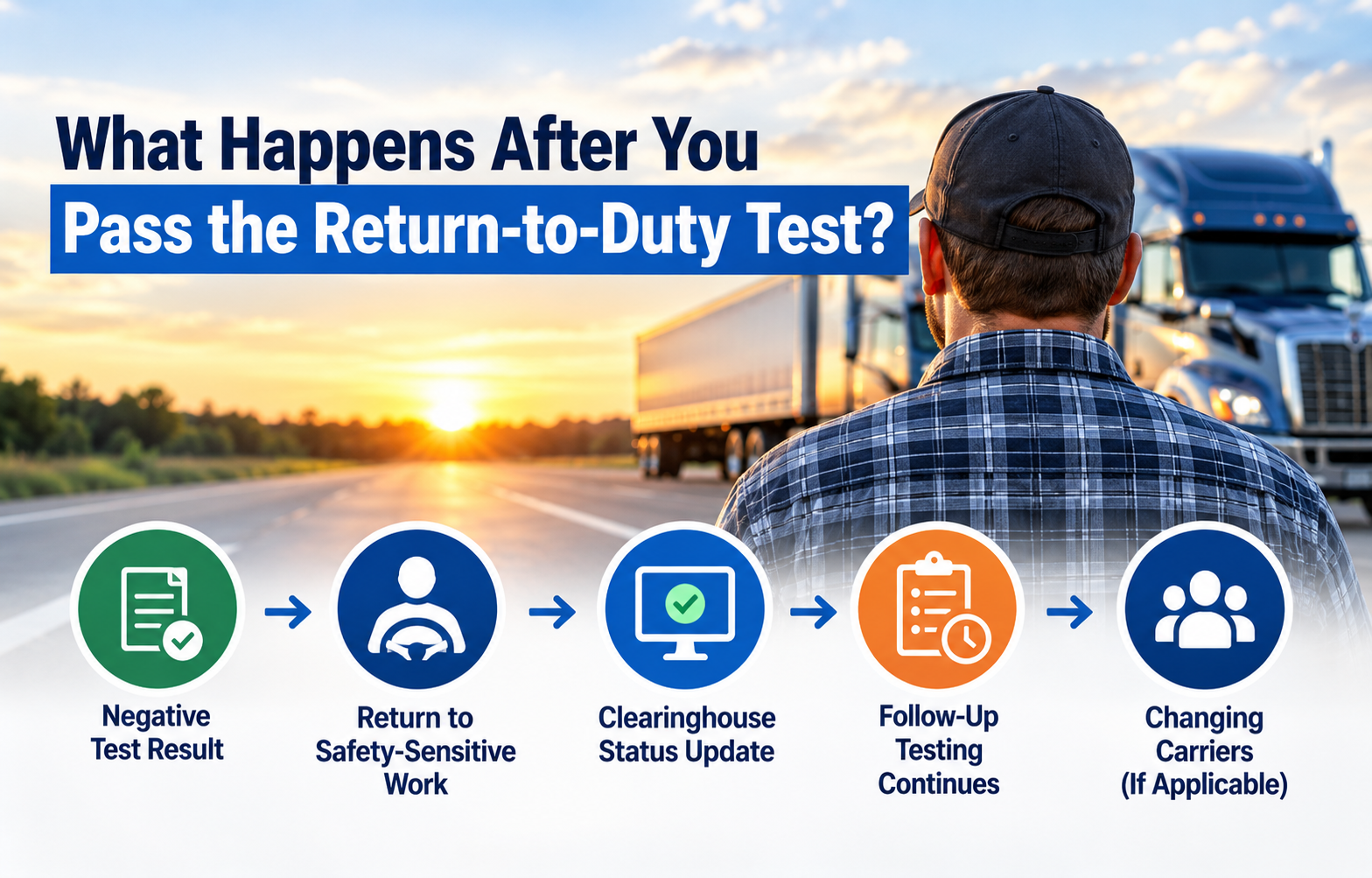
If an employer decides to permit the driver to return to safety-sensitive work, it must ensure that the required RTD test occurs and that the required result is received first. The employer, not the SAP, ultimately decides whether to place the employee back into a safety-sensitive position.
The SAP also establishes the follow-up testing plan that applies after the driver returns.
The federal process is structured, but the clinical recommendation is intentionally individualized. Two drivers with superficially similar violations may not receive identical education or treatment recommendations.
Drivers are better served by understanding the purpose of each stage than by focusing only on how quickly a box can be checked. Successful compliance is the bridge between the clinical SAP portion of the process and the employer-controlled Return-to-Duty testing stage.
For the current federal rules and official guidance, use the DOT and FMCSA resources below.
Continue with related guides about the DOT SAP Program, Return-to-Duty process, Clearinghouse, and follow-up testing.
© 2026 SAPTruckingJobs.com. All Rights Reserved.