Need help?
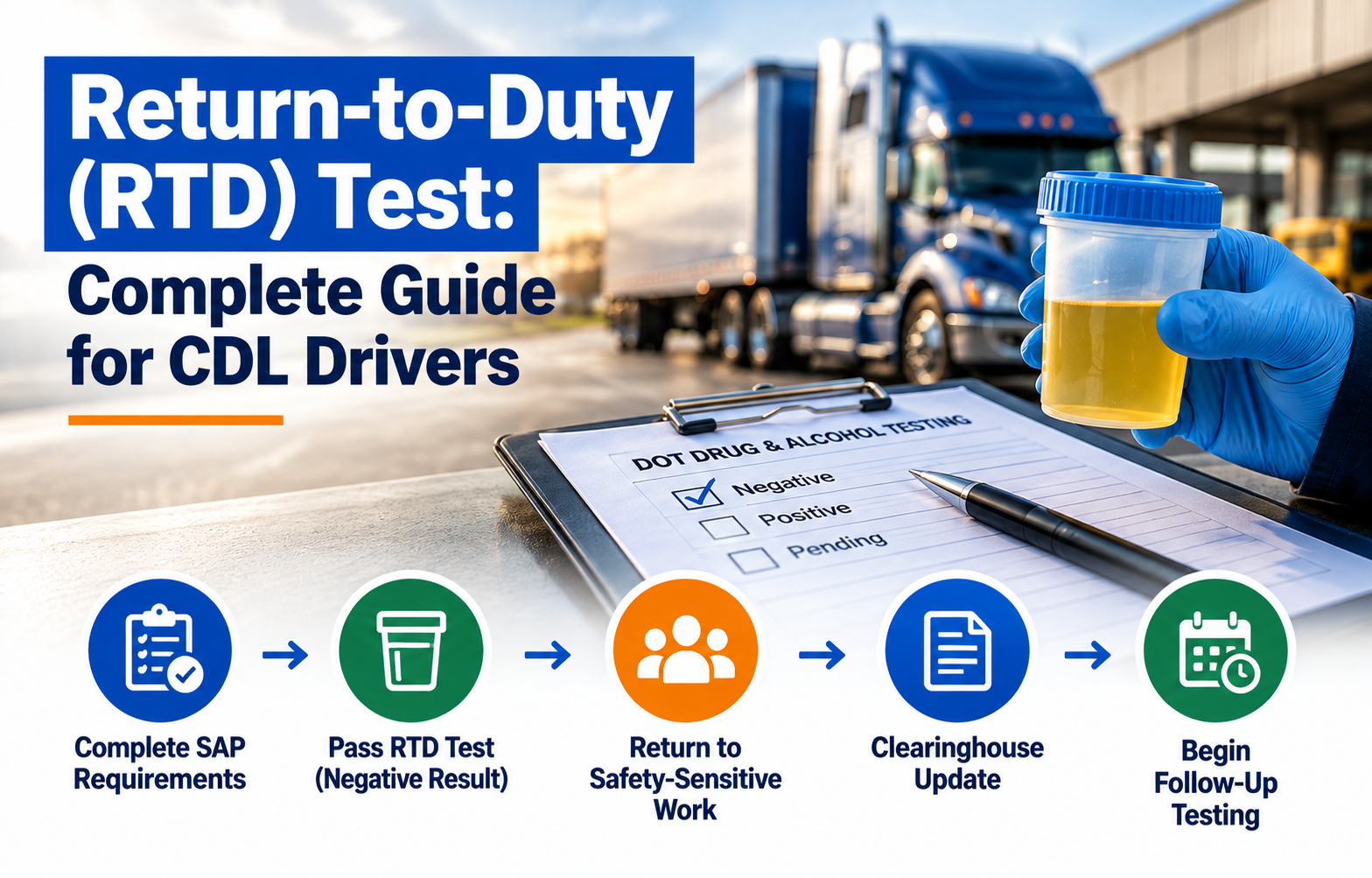
A negative Return-to-Duty test is one of the biggest milestones in the DOT SAP process. It means the testing requirement for returning to safety-sensitive work has been satisfied when the other applicable Return-to-Duty requirements are also complete. But it does not mean every SAP-related obligation disappears.
The next phase is centered on returning to work, confirming the driver's current FMCSA Clearinghouse status, and completing the SAP's follow-up testing plan while performing safety-sensitive duties.
An employer must have the required RTD result before allowing the driver to resume safety-sensitive functions. For a drug violation, that means a negative Return-to-Duty drug test. For alcohol, the result must be below 0.02.
Passing the test does not require a carrier to hire, rehire, or return the driver to a particular position. DOT rules establish the minimum conditions for returning to regulated work; the actual employment decision remains with the employer.
For a driver searching for a new carrier, this distinction is important. Being eligible to return under DOT rules is not the same as meeting every carrier's hiring standards.
For FMCSA-regulated CDL drivers, completion and proper reporting of the required Return-to-Duty step allows the driver's status to move from Prohibited to Not Prohibited when the federal requirements are satisfied.
Drivers should verify the actual status in their Clearinghouse account rather than assuming it changed simply because they received a negative laboratory result. The reporting step is part of the regulated process.
A Not Prohibited status addresses current eligibility. It does not mean the historical violation has immediately disappeared from the Clearinghouse.
Before the driver returns, the SAP establishes a written follow-up testing plan. Federal rules require at least six unannounced follow-up tests during the first 12 months of safety-sensitive duty after return. The SAP can prescribe more tests and can extend follow-up testing for up to 60 months.
The employer chooses the actual test dates, and the tests must be unannounced with no discernible pattern. Random tests cannot be substituted for required follow-up tests. DOT follow-up drug tests are also subject to direct-observation requirements.
This means a driver can be working normally and simultaneously remain subject to a SAP follow-up testing plan.
The follow-up plan follows the employee to subsequent employers. Leaving one carrier does not reset the plan, cancel remaining tests, or turn follow-up testing into ordinary random testing.
Breaks in safety-sensitive service also matter because the regulation measures the follow-up period in terms of safety-sensitive duty. Outstanding requirements can continue when the driver later returns to covered work.
A driver applying to another carrier should therefore know whether follow-up testing remains active and be prepared for the new employer to carry out the SAP's remaining plan.
There are several different points that drivers sometimes call “finished.” Completing education or treatment is one milestone. Passing the RTD test and becoming eligible to return to work is another. Completing the entire follow-up testing plan is a later milestone.
Clearinghouse record retention is yet another issue. A driver can be Not Prohibited and finished with Return-to-Duty testing while the historical violation remains in the Clearinghouse under federal retention rules.
Thinking about these as separate stages makes the period after the RTD test much easier to understand.
For the current federal rules and official guidance, use the DOT and FMCSA resources below.
Continue with related guides about the DOT SAP Program, Return-to-Duty process, Clearinghouse, and follow-up testing.
© 2026 SAPTruckingJobs.com. All Rights Reserved.