Need help?
The DOT Substance Abuse Professional (SAP) process is the federally regulated path used after a covered drug or alcohol violation. For CDL drivers, the process matters because a driver who has violated DOT drug and alcohol rules cannot simply move to another carrier or take another ordinary drug test and return to safety-sensitive work.
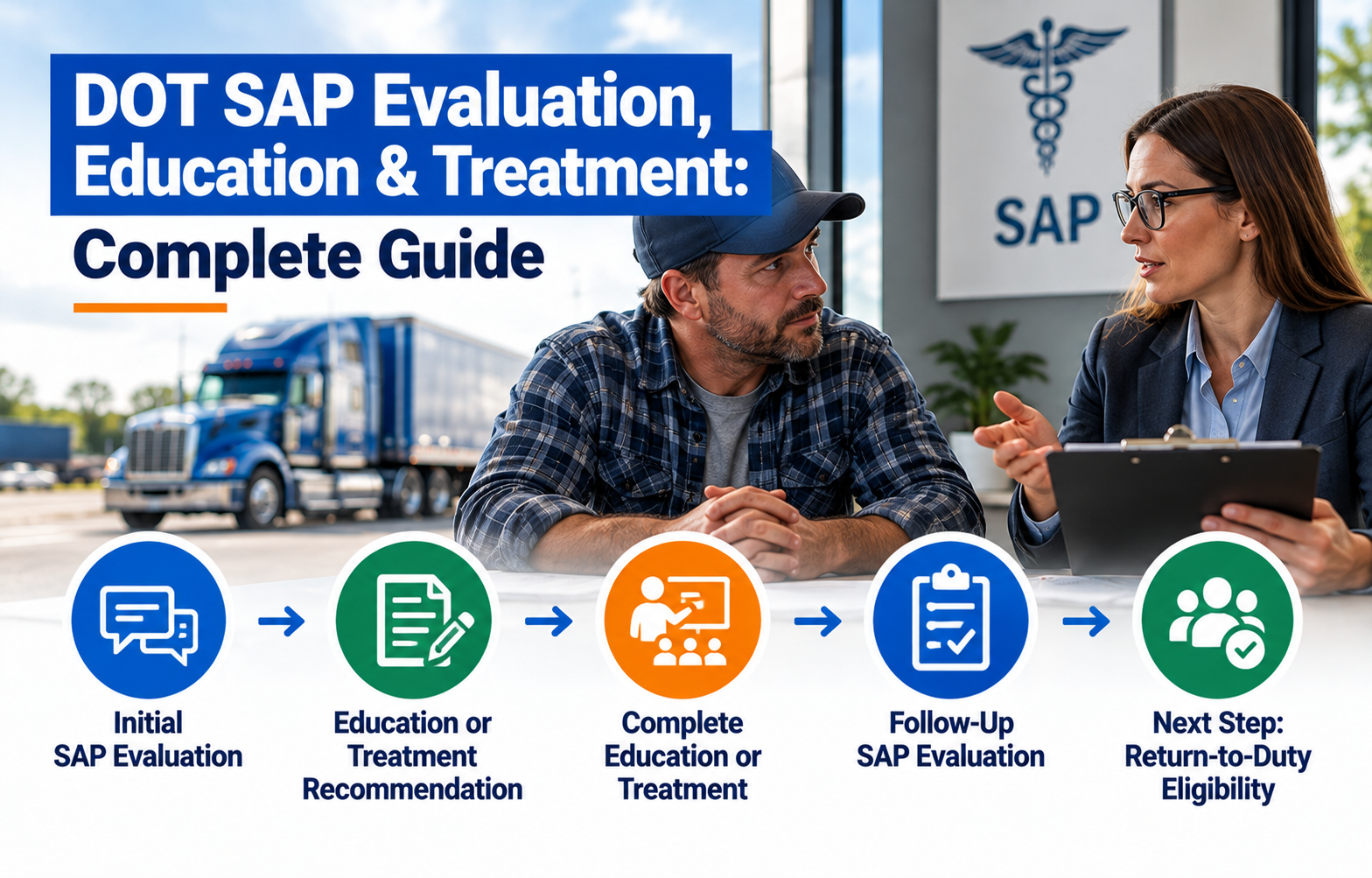
The SAP process has several connected stages. A qualified SAP evaluates the driver, recommends education and/or treatment, conducts a follow-up evaluation, and creates a follow-up testing plan. If the driver successfully complies, an employer may move forward with the required Return-to-Duty test before allowing the driver to perform safety-sensitive functions again.
The SAP process begins after a DOT drug or alcohol violation that removes the driver from safety-sensitive duties. The federal rules focus on whether the driver may perform regulated safety-sensitive work; they do not require a carrier to keep, rehire, or hire a particular driver. Employment decisions remain separate from the federal Return-to-Duty requirements.
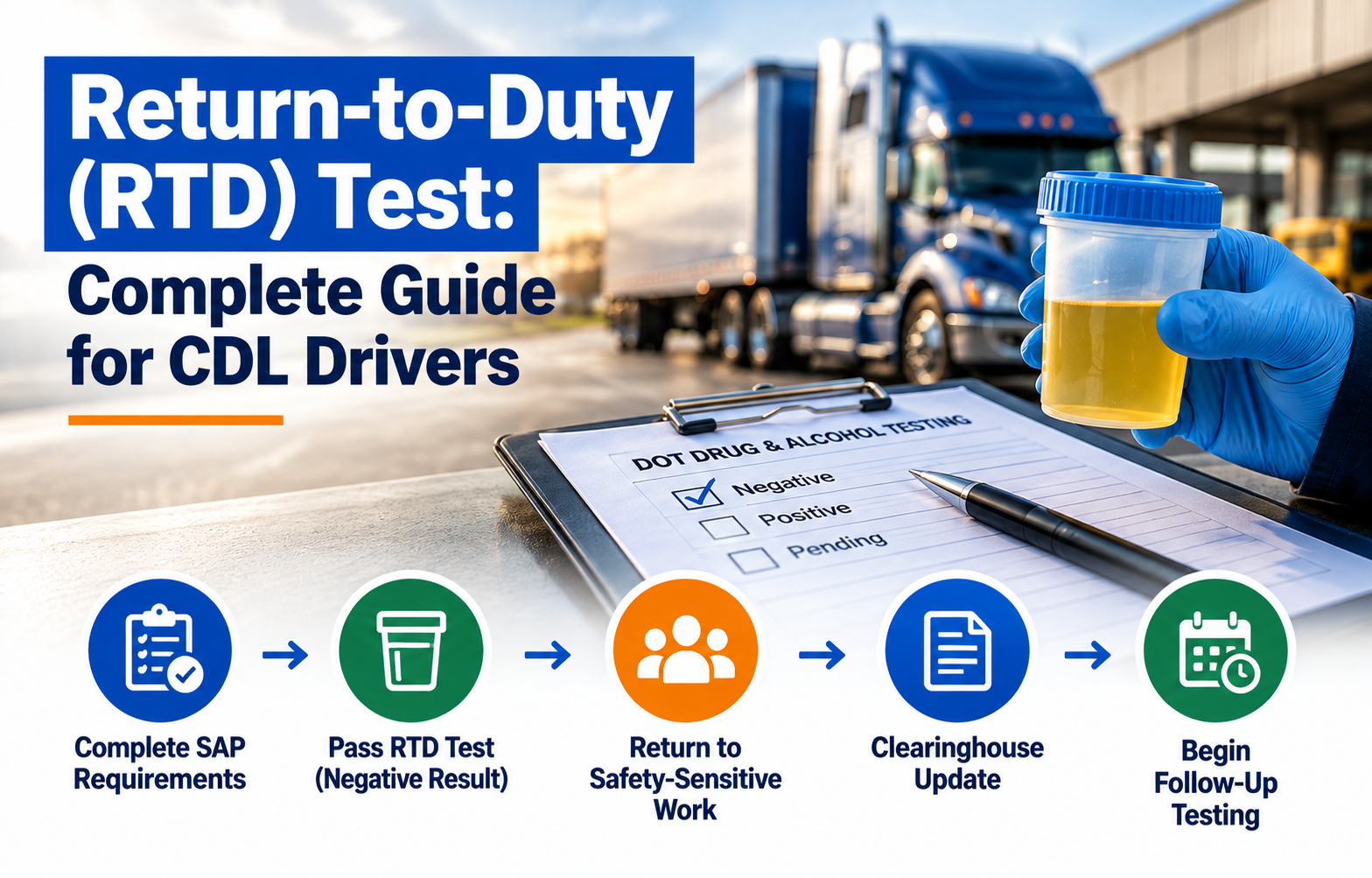
For a CDL driver who wants to return to regulated driving, the process normally moves from the violation to an initial SAP evaluation, completion of the SAP's recommendations, a follow-up SAP evaluation, a Return-to-Duty test, and then follow-up testing after the driver returns to safety-sensitive work.
That sequence is important because the stages cannot simply be rearranged. A Return-to-Duty test is not the first step. The SAP must first determine that the driver has successfully complied with the prescribed education and/or treatment.
A Substance Abuse Professional is not acting as an advocate for either the driver or the employer. Under DOT rules, the SAP's role is centered on public safety. The SAP performs a clinical evaluation and decides what education, treatment, or combination of the two is appropriate for the individual driver.
This is why there is no legitimate universal SAP course or guaranteed completion time that applies to every driver. One person's recommendation may be different from another's. After the required program has been completed, the SAP conducts a follow-up evaluation and reviews whether the driver has demonstrated successful compliance.
If successful compliance is established, the SAP provides the required report and develops a written follow-up testing plan. Only then can the Return-to-Duty testing stage move forward.
An employer that decides to permit the driver to return to safety-sensitive work must ensure that the required Return-to-Duty test is completed. For a drug violation, the employer must have a negative Return-to-Duty drug test result. For alcohol, the Return-to-Duty result must be below 0.02.
Passing the Return-to-Duty test does not force a carrier to employ the driver. It means the federal drug and alcohol requirements no longer prevent the employer from returning the driver to safety-sensitive work, assuming the other applicable requirements are satisfied.
For FMCSA-regulated drivers, the Return-to-Duty process also interacts with the Drug and Alcohol Clearinghouse. Current Clearinghouse status and the historical violation record are related, but they are not the same thing.
Returning to work does not end every SAP-related obligation. The SAP must prescribe at least six unannounced follow-up tests during the first 12 months of safety-sensitive duty after the driver returns. The SAP may require more tests and may continue follow-up testing for up to 60 months.
The employer schedules the actual testing dates. The tests must remain unannounced and follow the SAP's plan. Random testing cannot simply be substituted for a required follow-up test.
The follow-up plan also follows the employee to later employers and through breaks in service. A carrier change therefore does not automatically erase unfinished follow-up requirements.
The easiest way to understand SAP is to separate three different milestones: completing the SAP's education or treatment requirements, becoming eligible to return to safety-sensitive work after the required RTD test, and eventually completing the entire follow-up testing plan.
Those milestones can occur at very different times. A driver may be back at work while still completing follow-up testing, and a historical Clearinghouse violation may remain visible even after the driver is no longer Prohibited. Understanding those distinctions prevents many of the common misunderstandings surrounding the SAP process.
For the current federal rules and official guidance, use the DOT and FMCSA resources below.
Continue with related guides about the DOT SAP Program, Return-to-Duty process, Clearinghouse, and follow-up testing.
© 2026 SAPTruckingJobs.com. All Rights Reserved.